
Nostos: The Return (1989)
Memories and moving forward

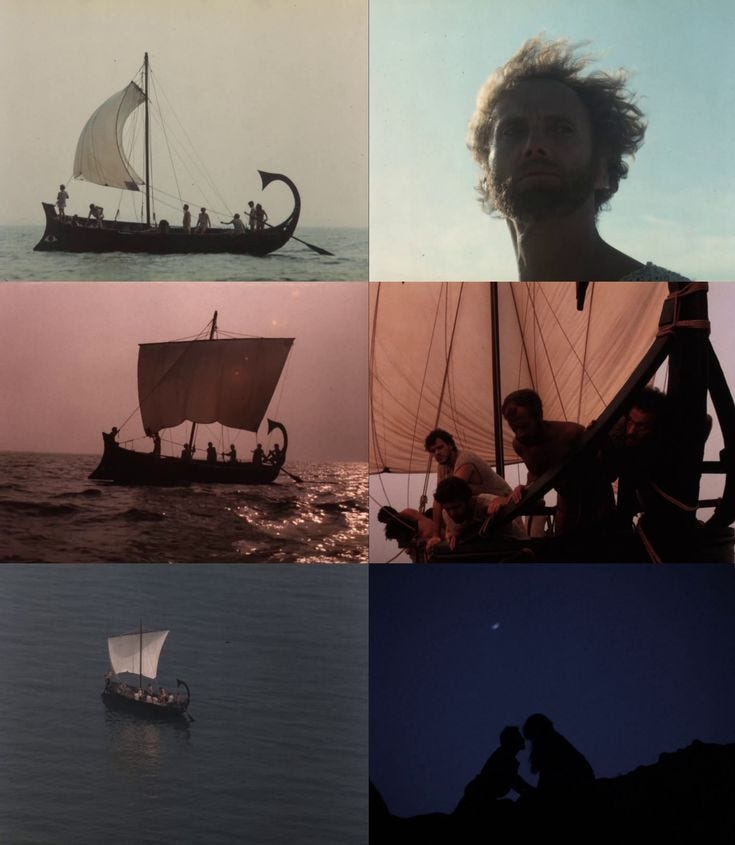
Nostos: The Return (1989) is a difficult film to describe. Franco Piavoli’s first fictional feature is nominally an adaptation of Homer’s Odyssey. Like the epic poem, it is inextricably tied to its mode of delivery and much is lost describing the details.
Film Talk
The film is an Eisensteinian patchwork, with fragments in time and space woven together akin to memory recollection. Moments are subjugated by impression, one moment a flash of images, and another a still life. To paraphrase a famous architect1, it is like describing Homer’s Odyssey to someone who’s never heard of the Odyssey and then asking them to retell it.
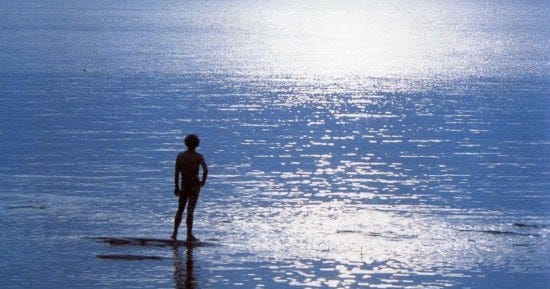
Every frame, be it ocean or person or landscape, is shot with purpose; the camera is an unwavering eye that transmutes the physical into – in the truest sense of the word – moving paintings. Men and women are often minuscule in the shadow of the natural world and more often than not enveloped in aspects of the world: darkness, water, greenery, among other things.
Time is compressed, extended, and experienced non-linearly. Subjective memories are depicted no differently than material moments. The viewer and Odysseus experience Durations – in the Bergsonian sense2. Years passed on Calypso’s island and minutes spent floundering in the ocean occupy the same striation on a stopwatch.
Poetry In Motion
Nostos may seem like a conglomeration of vibes – it is – but to understand the film, we must first understand the Odyssey and the bardic tradition.
Homer’s Odyssey originated as an epic poem, told and re-told by traveling bards. They entertained common people with stories of struggles between men and the gods.
This came before the parchment and the written word, and as such, recitals would rely on repetition and memory. These performances were aided with rhythms and beats from supporting musicians, which helped performers link memory to sounds, recounting the story while improvising over the beat3.
The source material – if a singular source ever existed – was to be elaborated upon and adapted by different men in different locales at different times with different audiences. Every retelling of the Odyssey was unique. Differences were not measured against a Platonic4 ideal but against a myriad of other performances, all vaguely similar and linked together in a rhizomatic web. A family of pure difference.
One can very well see Nostos as bardic cinema for the modern age.
The Style of Nostos
As mentioned, much is lost describing the details, but even with the loss, I hope to illustrate Nostos’s richness.
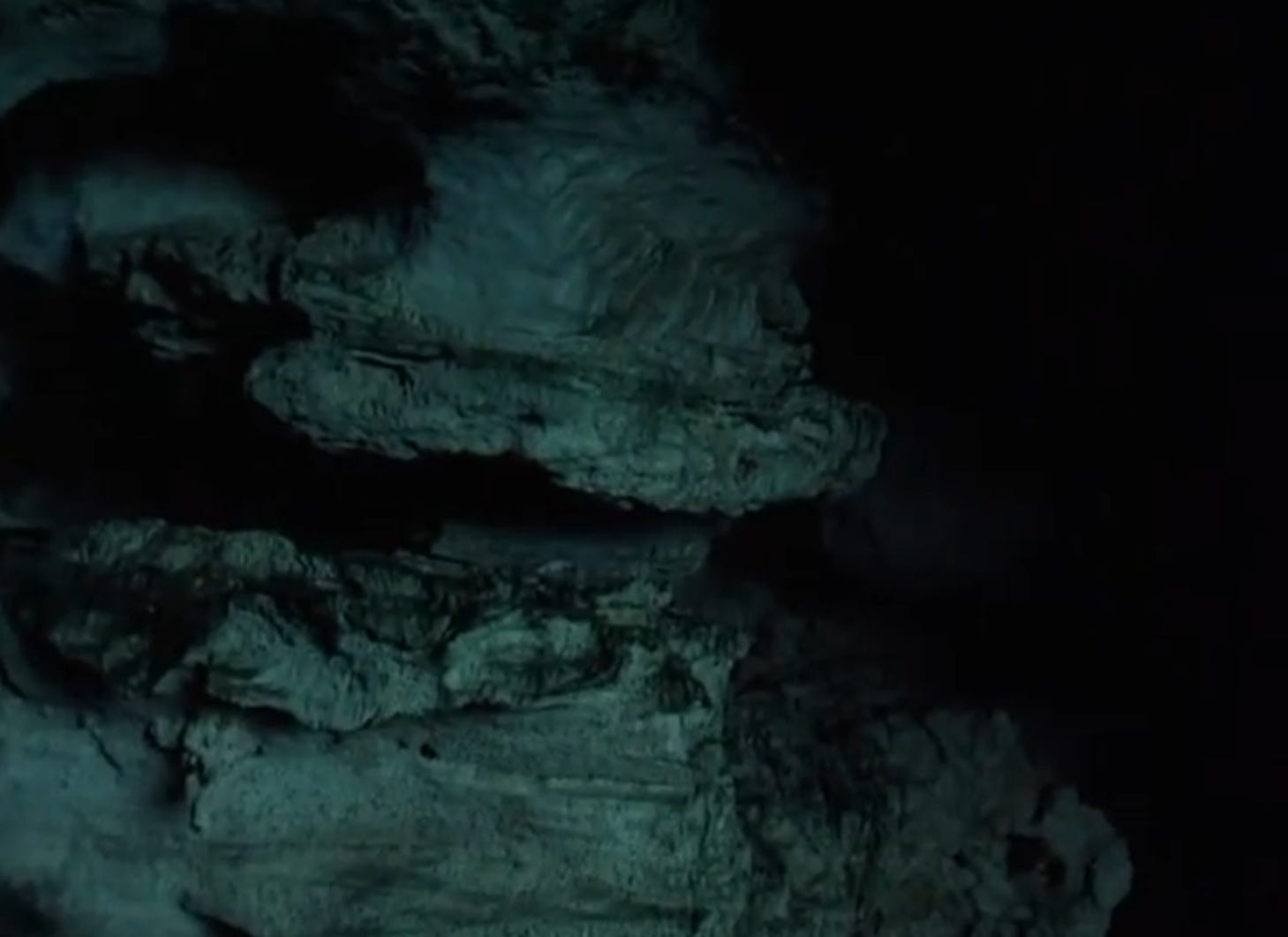
Early on, Odysseus stumbles into a seaside cave. The camera pans at a snail’s pace, desperate to capture the weathered faces of stone. One cave feature evokes the stature of Poseidon – grim, hard face with a sea-foam beard.
Odysseus stands alone in the cave. His silhouette, dwarfed by the vastness of the space, stands against a warped backdrop. The cave wall, though marked with divots and crags, glowed with streaks of light like rough strokes of a divine paintbrush. The cavern a canvas, a primordial work of art. Florentine stuccoes and Impressionist maestros in eras to come will attempt to recapture this sublime piece.
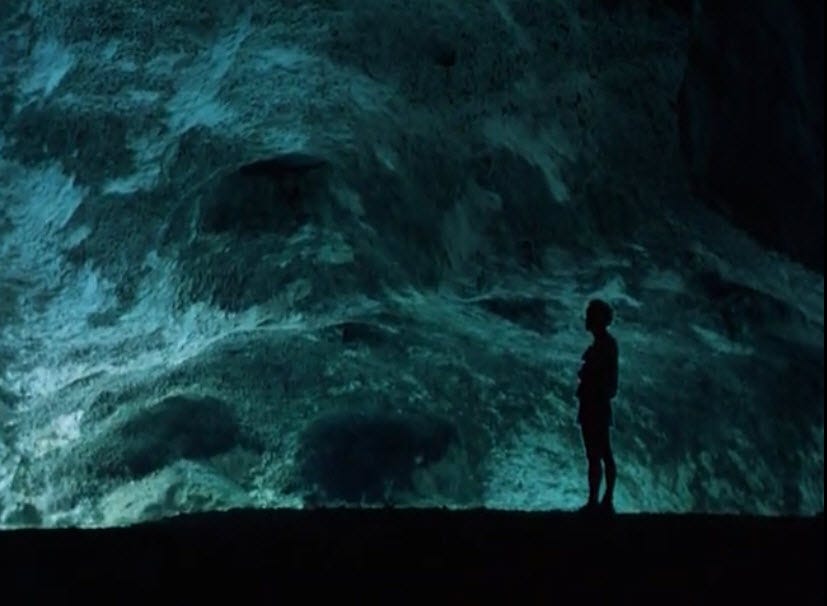
What is the cave? Poseidon made flesh – as Odysseus might have seen him? The cave of Polyphemus the cyclops? Or is the cave the cyclops, insurmountable at first glance, yet so easily captured by the cinematic eye?
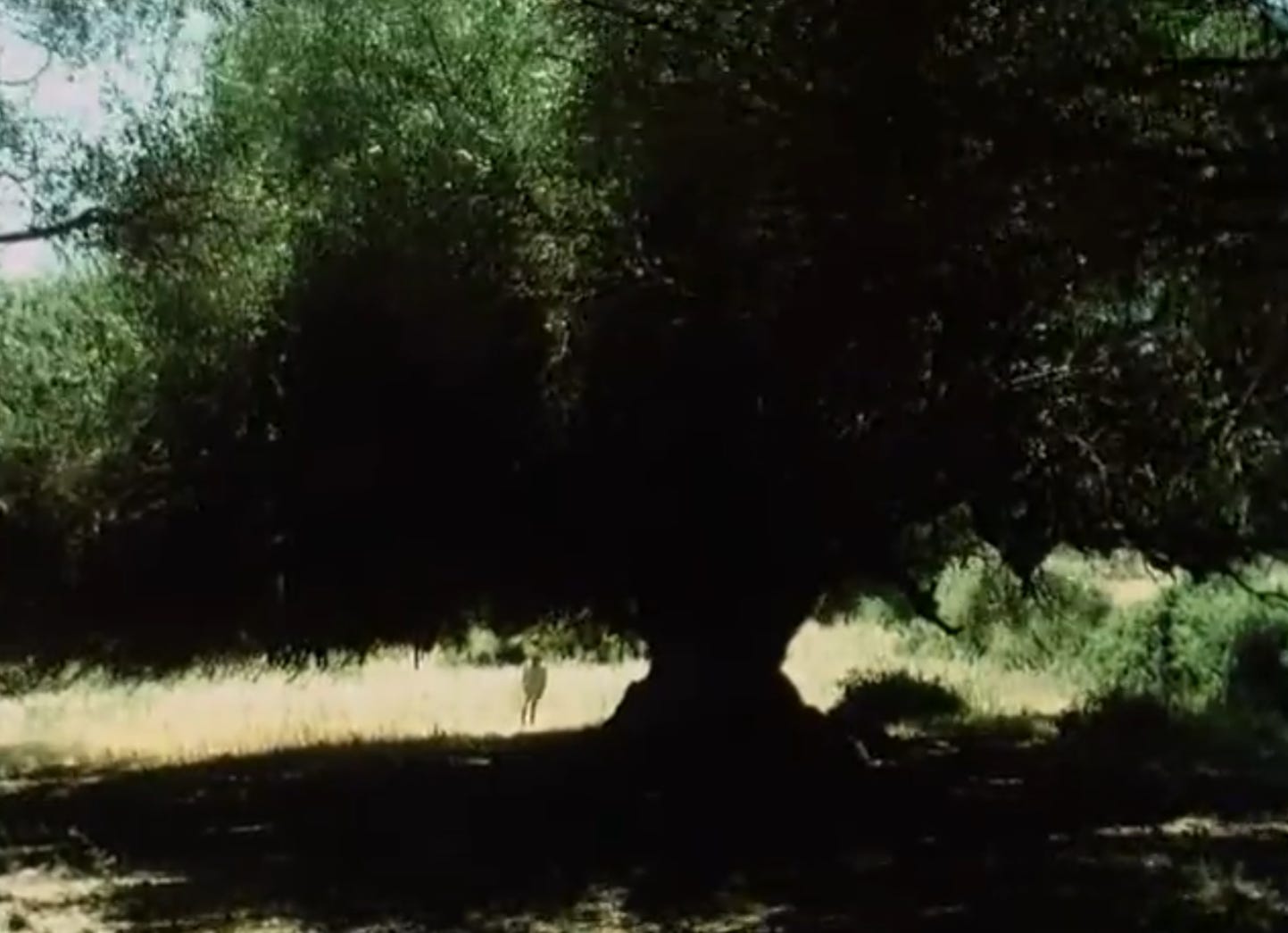
The moment lingers, but eventually like any other, it passes. Odysseus walks under the shade of a towering tree.
The Return
To understand Nostos may thus seem like an insurmountable task. Time and space are at the mercy of memory.
Does one ever “understand” a memory? Memory is something outside of mechanical categorization. The attempt to understand and dissect comes in the face of fear. We convince ourselves that by categorizing and understanding life, we may better experience it. A frog dies when it is dissected.
The ship bobs with the ebb and flow of waves, the bard improvises over the six-string beat, a lingering gaze unearths a memory.
Memory is the driver of returns, and on the other side of the coin — the fear that there is nowhere to return to. Nostos tells us to push on, for Odysseus never stayed with Calypso.
Clark Backrooms (2026)
Duration, for Bergson (and later Deleuze), was not a mechanical repetition of time. Bergsonian duration speeds up and slows down as determined by one’s inner life. Bergson believed that duration could never be fully expressed, only shown indirectly and partially. There is an aspect of the sublime involved.
travis scott
Plato would also not be born for more than a hundred years.
your footnotes are hilarious